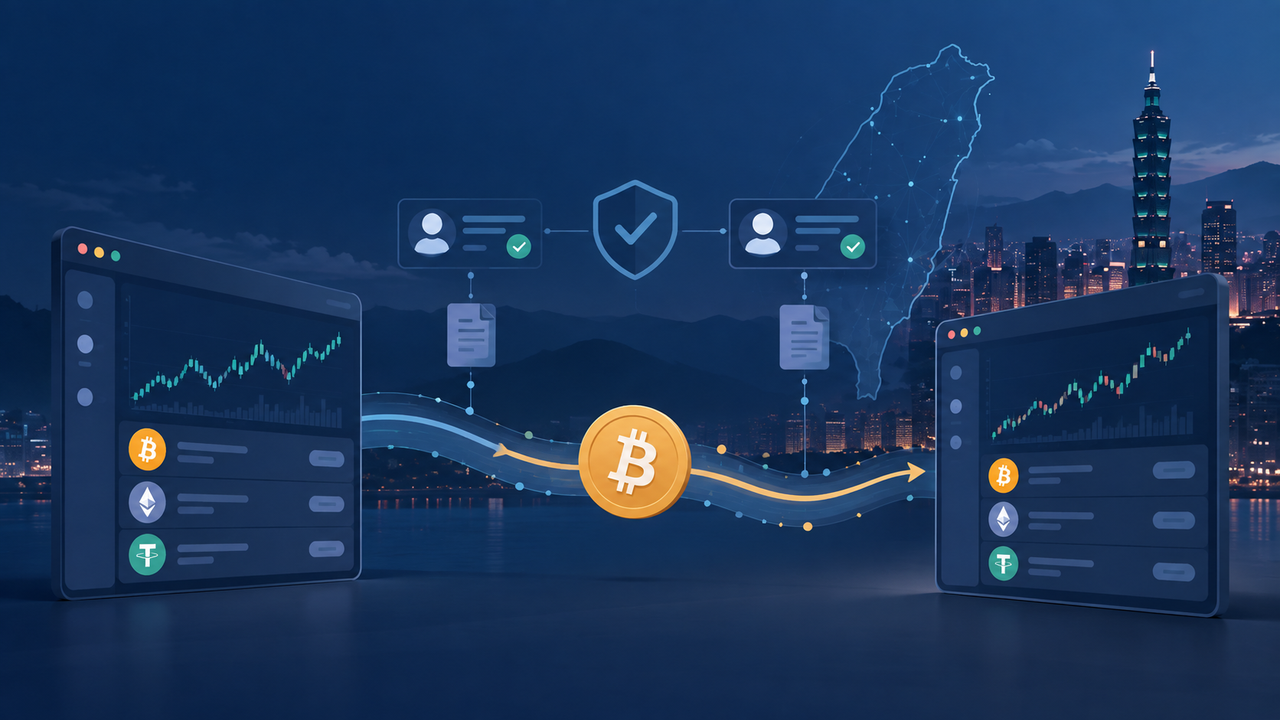
Sub-custody Is the Best Short-term Answer for Taiwan's Banks
From custody as a cost to custody as a service, how banks can take the first step into digital assets

Banks are moving from online to onchain. Since Taiwan's Virtual Asset Service Act was promulgated at the end of July, banks have been thinking not only about which licence to apply for, but about how to make money. The hard part is not just keeping assets safe; it is making custody pay.
One bank has floated a model to the regulator: "layered custody, a shared foundation, competition in services", with custody handled through a joint venture or jointly outsourced to a third party. Banks are no longer framing the choice as building everything in-house or giving up control, and are starting to think about short-term strategy. When a bank raises sub-custody on its own, it means it has done the analysis in earnest.
Digital asset business is stuck on the revenue model
The internet redefined how information flows; blockchain is redefining how assets flow. International surveys show that 88% of banks have set aside budget for digital assets, yet only 16% have anything live in commercial operation. The main obstacle is that banks can prove the trend but cannot say where the revenue will come from.
Taiwan's domestic banks face four unknowns: an unclear business model, revenue that is hard to forecast, talent that is hard to find, and overseas branches that are hard to support. Building a full in-house stack does not survive capital allocation, custody gets booked as an investment with no visible return, and naturally the lower the cost, the better.
Sub-custody secures a seat at the table
That makes sub-custody the most sensible way in. Many see it as a stopgap for banks that lack the capability; I see it as domestic banks' first ticket into digital asset infrastructure.
For the next two to three years, banks can use it to earn a place in the market at low cost, letting their frameworks, risk controls and talent grow out of real business. But cheap does not mean easy: the real barrier is the due diligence capability to select and oversee a sub-custodian.
Turning custody into service revenue
The ticket is in hand, but banks still have to find the revenue themselves. Already, 10% of Taiwanese businesses operating overseas have started accepting stablecoins as payment for goods. If overseas branches can connect Taiwanese clients' overseas positions with overseas clients' demand in Asia, in both directions, and then plug into tokenised assets and stablecoin settlement, custody can turn from a cost centre into service revenue.
The next question is whom to entrust sub-custody to. Choosing a compliant domestic custodial exchange brings depth in the local ecosystem and bargaining power; choosing a major international bank brings credit ratings and cross-border compatibility. This choice decides whether, ten years from now, Taiwan's digital asset custody is a node of its own or a branch of someone else's.
A bank that only does custody will be the next telecom operator collecting nothing but pipe fees. The competition ten years from now is not about who gets a licence first, but about who first finds a model that makes assets generate returns.