Taiwan's Travel Rule is coming: a guide to crypto transfers from October
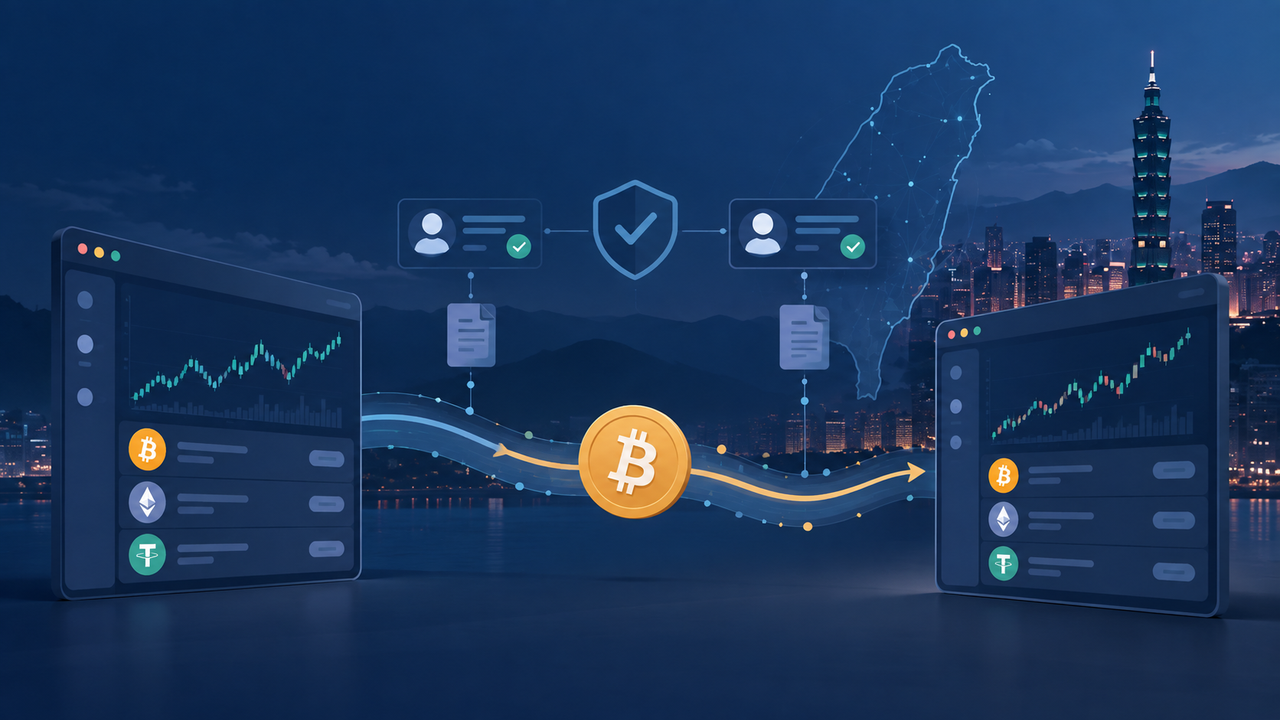
The FSC plans to introduce the virtual asset Travel Rule in phases from October 2026. For transfers within its scope, platforms must pass basic information regardless of the amount. A single transfer worth more than NT$30,000 requires additional details, including date of birth and residential address for individuals.
In practice, moving USDT, BTC or other virtual assets from Taiwanese Exchange A to Exchange B will involve more than a blockchain address and transaction record: the platforms will also exchange some identity information about the sender and recipient.
Virtual asset transfers are gradually becoming more like bank transfers.
What does the Travel Rule regulate?
When you send money to a friend at another bank, the transfer carries basic information about both parties. Banks can use those details to investigate suspected money laundering.
Virtual asset transfers have not traditionally worked this way. Blockchain records are public, but an address is a string of characters that does not itself identify its owner. Assets can also move across borders quickly, raising money laundering and terrorist financing concerns.
The Financial Action Task Force (FATF) therefore recommends that virtual asset service providers (VASPs) pass information about the sender and recipient to the other provider when transferring assets, much as banks do. The principle is that information travels with the asset.
Taiwan already had a related provision in its anti-money laundering and counter-terrorist financing regulations for virtual asset service providers, issued on 30 June 2021. However, differences in national requirements and technical standards prevented implementation. The FSC's planned amendments and public consultation now set out a phased timetable.
Tip: the rule applies below NT$30,000 too
The NT$30,000 threshold is easy to misunderstand. Under the FSC's proposed approach, transfers between VASPs within the applicable scope are subject to the Travel Rule regardless of value.
Keeping a transfer at NT$29,999 does not remove the requirement to pass basic information.
NT$30,000 is the threshold for obtaining additional information, rather than the threshold for applying the Travel Rule.
For transfers between domestic VASPs, platforms generally obtain and transmit basic sender and recipient information, such as names and wallet details. When a single transfer exceeds the equivalent of NT$30,000, additional information includes date of birth and residential address for individuals, or an official identification number and registered address for legal entities.
Above that threshold, the receiving VASP must also compare the recipient information received with its existing customer records.
What changes for ordinary users?
Moving assets may involve a few more steps. If you send USDT from Exchange A to a friend's account at Exchange B, you may need to confirm the receiving platform and account type and enter the recipient's name, in addition to the address and network.
Transfers between your own accounts at two VASPs are still transfers between providers. XREX's published guidance specifically states that transfers to your own account at another Taiwanese VASP require the relevant information.
A successful blockchain transaction does not necessarily mean the exchange has credited the deposit.
The receiving platform may still need to check names and other details. Mismatches may require additional processing, or result in a deposit being held or rejected, depending on the platform's procedures.
Alongside checking the address and network, matching the recipient's registered details at the receiving platform becomes important.
What about overseas exchanges and private wallets?
The first phase focuses on transfers between domestic Taiwanese VASPs. The FSC plans to extend the rule to transfers between domestic and overseas VASPs in the second phase, expected at the end of 2027. Differences in regulations, data formats and system connectivity require more preparation for cross-border implementation.
Self-custody wallets, such as MetaMask or hardware wallets, are not another VASP. Transfers to them are therefore different from domestic VASP-to-VASP transfers covered by the first phase.
This does not mean private-wallet transfers face no review. Platforms may still request information under existing anti-money laundering, risk management or wallet verification procedures.
These are two separate matters: the Travel Rule governs information exchange between VASPs, while each service platform continues to apply its own risk controls and wallet checks.
Frequently asked questions
Above what amount is additional information required?
For a single transfer worth more than the equivalent of NT$30,000. Individuals must provide date of birth and residential address; legal entities must provide an official identification number and registered address.
Does a transfer below NT$30,000 require no information?
No. Providers must pass basic sender and recipient information regardless of the amount. Additional information is required above NT$30,000.
Does this apply to overseas exchanges?
The first phase covers transfers between domestic VASPs. Transfers involving overseas providers are expected to be included in the second phase at the end of 2027.
What about my own cold wallet or personal wallet?
The FSC's currently published information does not specify the practical process for self-custody wallets. Users should consult the final amendments and platform announcements.
Is this a new tax rule?
No. The Travel Rule concerns anti-money laundering and counter-terrorist financing, rather than tax law. Whether a transaction creates taxable income depends on its nature and the applicable tax rules. It does, however, make records of asset movements more complete.
When does it start?
The FSC plans to apply the rule to transfers between domestic providers from October 2026. The precise effective date remains subject to the officially announced amendments.
Closing thoughts
The Travel Rule brings anti-money laundering requirements into everyday asset transfers, enabling platforms to check sender and recipient information. Aligning Taiwan's virtual asset industry with international standards can help build trust. How well the system works will also depend on smooth information exchange between platforms and proper protection of personal data.
For users, entering more details and making another confirmation may initially feel inconvenient. Platforms need to explain which information is required, who receives it and how mismatches are resolved. Clear transfer instructions and explanations of how personal data is used will help users make the rule part of their everyday routine.
Sources: FSC press release, 4 August 2026, XREX's Taiwan Travel Rule user guide.