Vitalik: Blockchain Is Not the Objective, It Is a Tool
In the age of AI, censorship resistance, open source, privacy and security matter more than ever
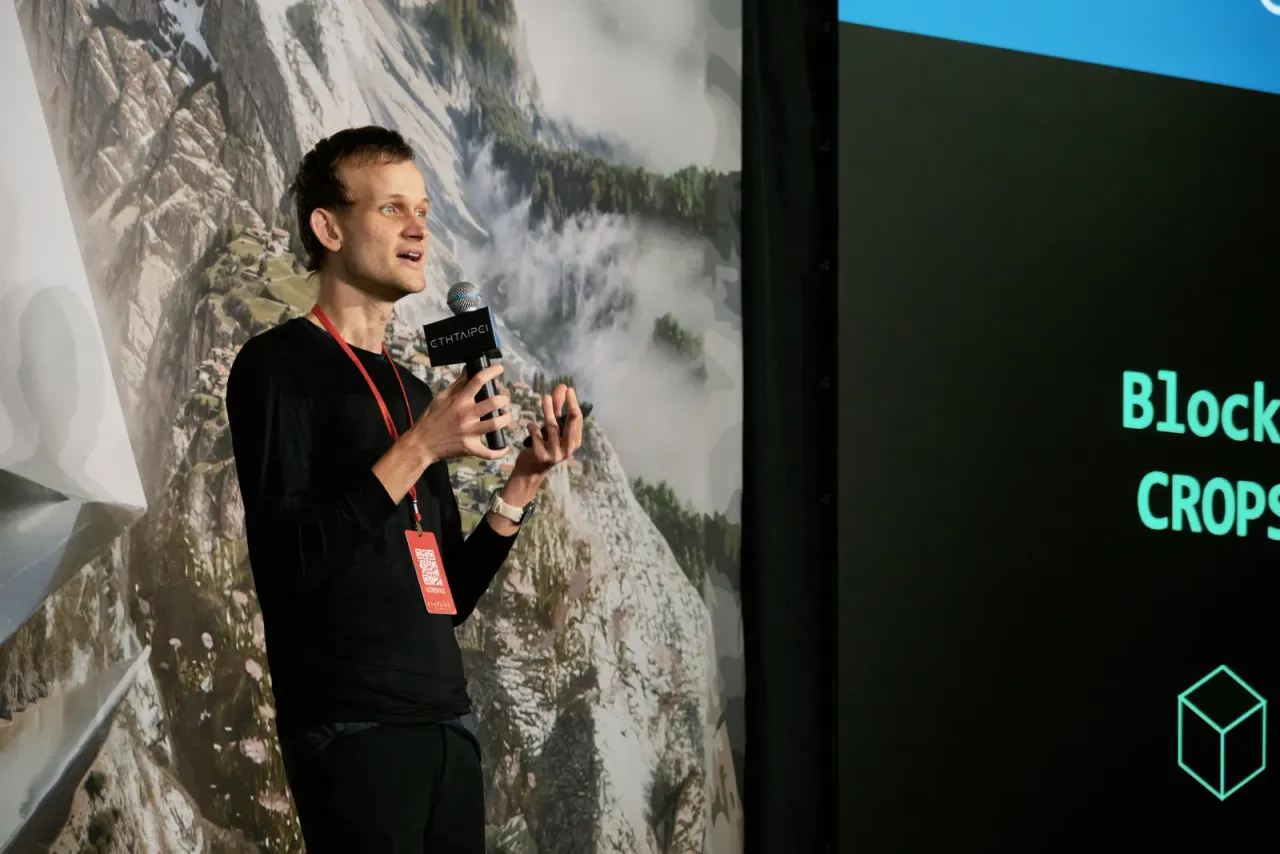
Ethereum co-founder Vitalik Buterin spoke in Taiwan today under the title "Blockchain is one tool, CROPS is the objective," arguing that as AI advances and digital surveillance spreads, the blockchain industry should rethink what its technology is actually for.
He grouped the values worth pursuing under the acronym "CROPS" — Censorship Resistance, Open Source, Privacy and Security — and stressed: "Blockchain is a technology that can help us achieve CROPS, but blockchain itself is not the objective."
From "Blockchain First" to "Objectives First"
Looking back at the last crypto cycle, Vitalik noted that the industry became fixated on "putting everything on chain": NFTs, personal data, even social relationships were treated as valuable simply because a blockchain was involved. That mindset turns the technology into an end in itself and loses sight of whether a product solves a real problem.
Blockchain may no longer be the shiniest technology in the industry's eyes, he said, but the problems behind it have only grown more important. Financial system security, the centralisation of AI platforms, digital privacy, network surveillance and the trustworthiness of information systems are all pushing censorship resistance, open source, privacy and security back to the centre of technology.
He therefore proposed a different starting point: "Objectives first. Technology is instrumental." Define the problem people actually want solved, then decide what role blockchain, cryptography, zero-knowledge proofs, trusted hardware or AI should play in it — rather than starting with a blockchain and hunting for somewhere to apply it.
The stronger AI gets, the more privacy and decentralisation matter
A second theme of the talk was the relationship taking shape between AI, blockchain and cryptography.
As users come to depend on frontier large language models, Vitalik said, AI service providers may become the new centralised "choke point." What users type, how that data is processed and whether it trains the next generation of models often lack meaningful transparency; better AI also makes it easier to re-identify people from writing style, behavioural patterns and metadata.
He offered privacy-preserving AI as an example of an architecture that is not "everything on chain": a local LLM first strips out personal information and stylistic fingerprints, the request travels over an anonymity network, and payment settles through Ethereum-based payment channels — so separate queries are hard to link back to one user.
In that design the blockchain is only one component of the system, yet it does critical work in payment, commitment, verification and record-keeping.
The value of blockchain is not "everything on chain"
He took surveillance cameras as a further example: if a camera only transmits footage when it detects violence and deletes everything else immediately, then open systems, trusted hardware, local AI models and a blockchain can together produce a usage record that outsiders are able to verify.
Here the blockchain does not store the footage; it acts as a verifiable counter and a public commitment layer, letting society confirm how many times a camera actually activated and transmitted data, and making secret abuse of the system harder.
Blockchains are particularly good, he said, at payments, commitments that cannot be quietly altered, version verification, and proving that something "happened this many times and no more." Treat the blockchain as a tool rather than a destination and it turns out to be useful in many places that do not look like blockchain applications at all.
Ethereum's next phase: ZK, privacy, verifiability and AI-accelerated research
On Ethereum's own roadmap, Vitalik said zero-knowledge proofs will remain the foundation for scalability, privacy and verifiability — covering proof aggregation, ZK-EVM, higher gas limits, improvements to PoS consensus, light clients, and further reductions in the cost of private transactions and verification.
He also pointed out that AI is visibly accelerating protocol and cryptography research, speeding up development and lowering the barrier for researchers to understand existing work and contribute to protocol development.
Over the next few years he expects blockchain and cryptography to intertwine more deeply, with the Ethereum ecosystem continuing to move toward being easier to verify, more private, more secure and more decentralised.
The next step for stablecoins may not be another dollar
Stablecoins came up in the Q&A. Asked about a market dominated by centralised issuers such as USDT and USDC, Vitalik offered another direction worth exploring: rather than chasing a "decentralised stablecoin," ask what kind of stability people actually need.
"Stable value" means different things to different people, he said. Someone living in New York, a rural farmer and a business owner face different living costs, income sources and future spending risks. The genuinely valuable product may therefore be a "personalized decentralized stable value" that lets each person build a hedge suited to their own needs.
If markets covered real everyday spending — street food, vegetables, bread, the traditional market — people could hedge against their own future costs. Such products will not suit everyone, but for some groups they may fit real needs better than a coin simply pegged to the dollar.
Shared objectives matter more than using a blockchain
In an era of concentrated corporate control, permanent surveillance and fast-moving AI, Vitalik said developers should first find the problem they genuinely care about, then judge whether a blockchain suits part of the solution. If the problem does not need a blockchain, there is no reason to force one in.
He added: "Someone who shares our underlying objectives but does not use a blockchain is more of an ally than someone who uses a blockchain but does not share those objectives."
That suggests that now AI has become the industry's new centre of gravity, blockchain's next contest may not be about proving that anything can go on chain, but about proving that in real problems — financial security, AI privacy, digital identity, trustworthy information and resistance to surveillance — blockchain and cryptography offer trust infrastructure that other technologies cannot easily replace.
From Blockchain First to Objectives First, the message Vitalik brought to Taiwan was clear: technologies come and go, but the need for censorship resistance, open source, privacy and security does not. The long-term value of blockchain should be measured by whether it delivers those objectives.