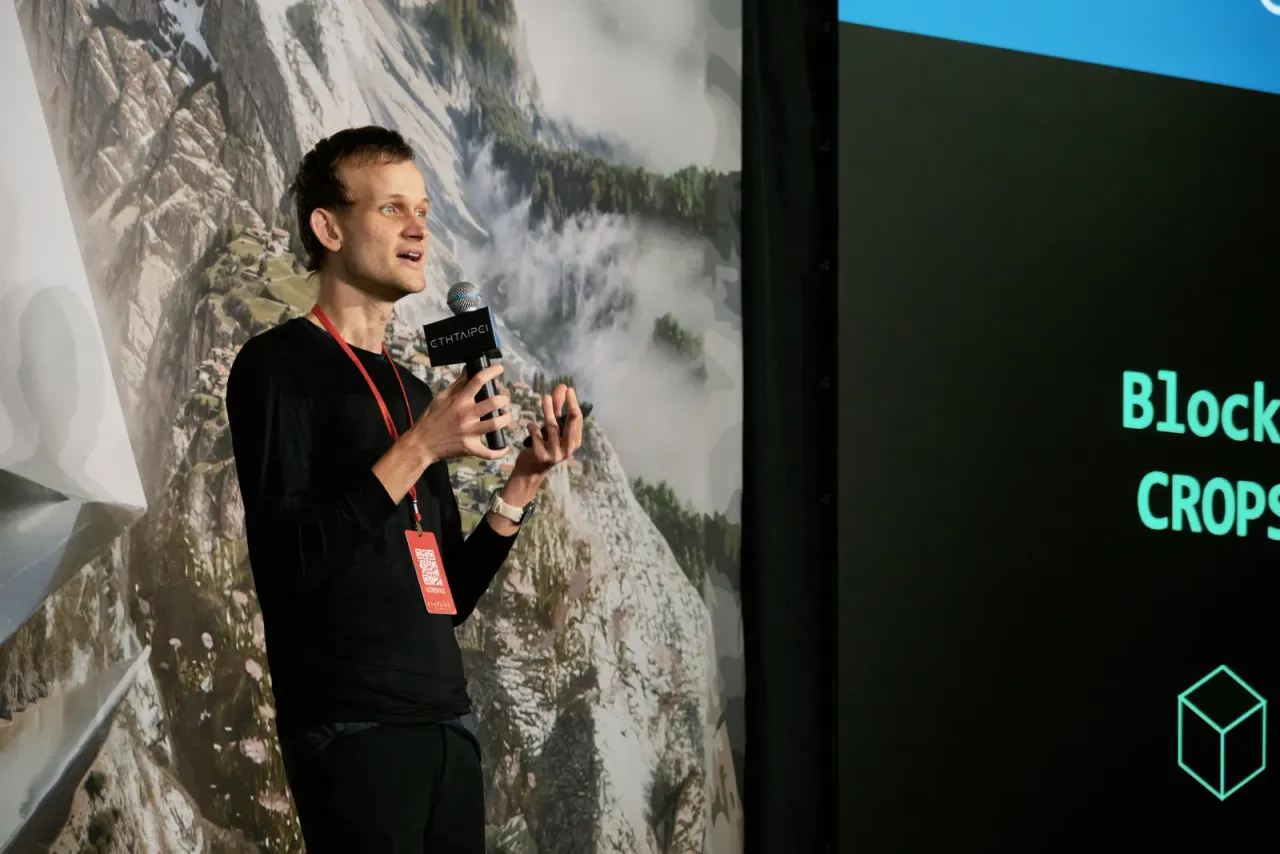
FUTUREMODE 2026 Recap: Not AI vs. Blockchain, but AI + Blockchain

FUTUREMODE, the Taiwan Future Festival, wrapped up on 6 September 2026 after three days at the Expo Dome in the Yuanshan section of Taipei Expo Park.
As one of this year's co-hosts, the Taiwan Association for Blockchain Ecosystem Innovation (TABEI) joined the Onboard team, Google Cloud and speakers, companies and industry partners from many fields in bringing AI, blockchain, digital assets, fintech and regulation to the Expo Park. Across three stages, the festival ran more than 40 keynotes, panels and fireside chats, plus more than 30 workshops and product showcases. BUILDMODE, the hackathon co-hosted with SITCON, drew more than 600 developer sign-ups.
From Taipei Blockchain Week to FUTUREMODE
Since it began as Taipei Blockchain Week in 2022, the event has redefined itself almost every year: reconnecting Taiwan with the world after the pandemic, growing the developer community, bringing the mainstream public into Web3, and last year exploring where Web3 meets AI. This year it was renamed FUTUREMODE, formally bringing AI, digital assets and frontier technology under one roof.
The new name reflects a broader shift: the once-clear boundaries between technology sectors are blurring, and the crypto industry is moving into the mainstream. In the capital markets, AI and crypto are often cast as two tracks competing for the same money and attention. Step into the sessions, though, and the places where their applications overlap turn out to matter far more than the rivalry.
Looking back over the three days, we saw three trends come up again and again.
Trend one: AI moves from "tool" to "agent"
This year's AI sessions were no longer about how much more powerful the models have become, but about how AI enters real work and real transactions. From OpenAI showing how Codex fits into software engineering, to Mastercard's head of agentic AI taking the stage, to a hackathon with tracks on "AI agents and automation" and "the future of work", AI is shifting from a tool that answers questions to an agent that carries out tasks on people's behalf.
Jamie Lin, president of Taiwan Mobile, summed up the change in a panel with the idea of "reverse division of labour": people once raised productivity by slicing work into ever-smaller pieces, but today one person working with a team of AIs can cover the whole value chain, from market research to product launch. As the cost of getting an answer falls, human value moves from "remembering the answer" to "judging the answer".
The more AI can do, however, the less its problems are purely technical. Once agents start paying, buying insurance and managing assets for people, two questions raised by Chan Ting-yi, TABEI's Honorary Chair and chair of the Artificial Intelligence Foundation, become impossible to avoid: "Do we trust it?" and "Who actually has the right to act on my behalf?"
Trend two: digital assets move from "on chain" to "into the system"
The digital asset discussions made a similar turn. From exchanges and industry watchers debating VASP policy and RWA, to panels on stablecoins, asset tokenisation and enterprise ledgers, the question was no longer "can it go on chain?" but whether markets and institutions can absorb it once it does.
In the RWA sessions, speakers agreed that the technology for issuing tokens has long been mature; the real bottlenecks are genuine buyers and sustained liquidity. On the enterprise side, accountants and lawyers pointed out that a blockchain can prove how much an address holds, but not who owns that address; and two parties agreeing to use a token as collateral does not mean the arrangement will hold up against third parties in law. What is "verifiable" on chain still has to become "auditable" in accounting, "creditworthy" in finance and "enforceable" in law.
The regulatory discussions pointed to the same conclusion: for the industry, regulatory certainty can matter more than how light the rules are. When the rules draw clear red lines around the underlying risks, such as reserve assets and redemption for stablecoins, financial innovation built on top has room to grow.
Trend three: AI and blockchain meet at "trust"
Put the first two trends side by side and it becomes clear they are answering the same question.
AI is amplifying what each person can get done, but once it starts making decisions for people, it needs verifiable identity, clear authorisation and a traceable record of what it has done. Blockchain offers a verifiable ledger, but to truly enter finance and business it also needs real market demand, with accounting, legal and regulatory systems ready to take it on.
AI lacks trust that can be verified; blockchain lacks trust that institutions recognise.
That is why we believe the next stage will not be a zero-sum contest of AI vs. Blockchain, but AI + Blockchain. When an AI agent has to prove who it is, whom it represents and what it has done, digital identity, on-chain records and programmable authorisation are exactly the problems blockchain handles best. And as blockchain moves into business and finance, AI will become a tool that makes compliance, auditing and risk management more efficient.
What comes next for TABEI: making new technology trustworthy
These trends also line up with the work TABEI has been doing for years.
Since holding the first Taiwan Blockchain Summit in 2016, TABEI has acted as a bridge between the public and private sectors, helping the blockchain industry and startups connect and build together. Since 2020 it has operated N24 Taipei ARK, where Web3 startups and Web2 businesses run proofs of concept side by side.
As AI and blockchain converge, our focus is on trust. Just one week before FUTUREMODE, TABEI hosted the 2026 Trustworthy AI Hackathon at N24 Taipei ARK, where 22 teams got hands-on with making AI applications trustworthy and verifiable. On the digital asset side, we will keep talking with financial institutions, accountants, lawyers and regulators, helping businesses work out which use cases are ready for adoption and which institutional conditions still need to be put in place.
We have always believed that technology makes its real impact not when it stays inside its own circle, but when people from different fields start using it, debating it and even redefining it together — just as the internet did when it went mainstream.
Rooted in the blockchain community, TABEI will keep connecting industry, government, academia, developers and partners from every field, so that new technology is no longer a conversation for the few, but part of a wider dialogue across industry and society.