Taiwan Opens Deposit Token Pilots: A Guide to Tokenised Deposits
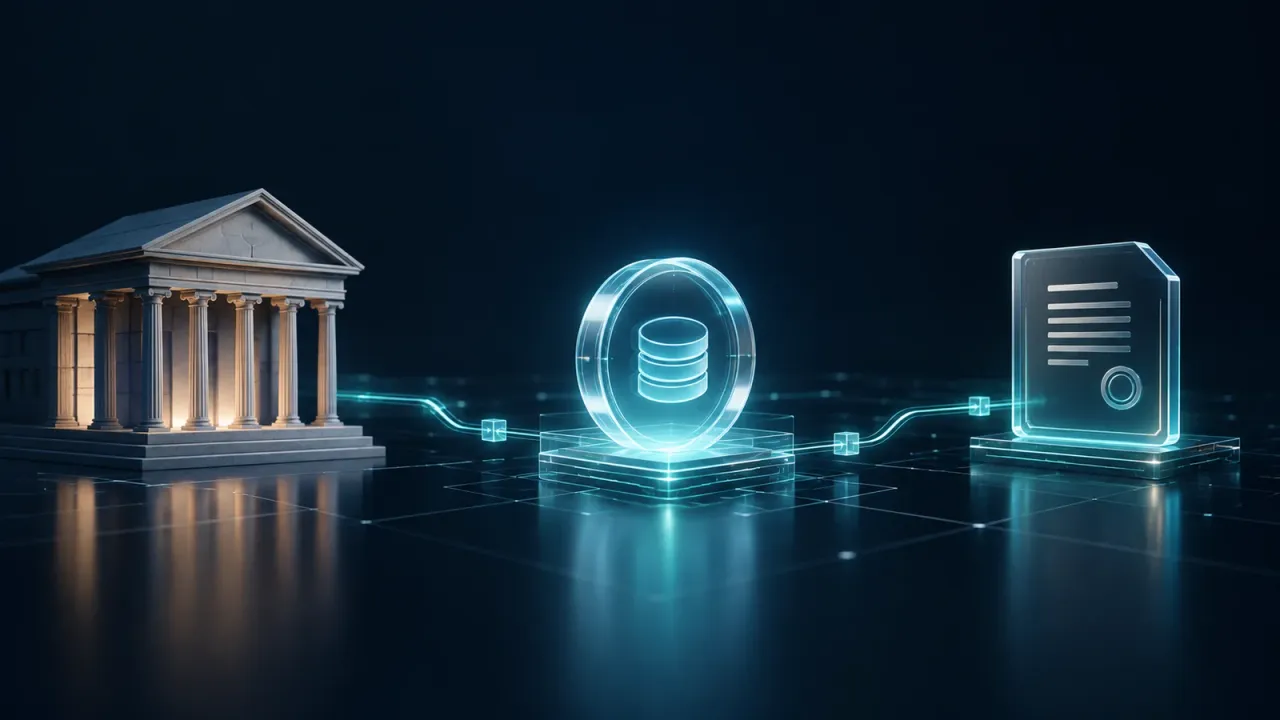
On 22 September 2026, Taiwan's Financial Supervisory Commission (FSC) opened applications for banks to pilot deposit tokens. Put simply, banks can now start exploring what it would take to "move deposits on chain".
To keep pace with the tokenisation of real-world assets (RWA), Taiwan passed the Virtual Asset Service Act earlier this year. Now it is piloting another piece of new finance, yet so far only Taishin Bank has stepped forward.
What exactly is a deposit token?
Let's start by clearing something up.
A deposit token is not a new currency issued by banks, nor is it another cryptocurrency to speculate on.
According to the FSC, a deposit token uses blockchain or similar new technology to represent or record deposits that already exist in the banking system. In other words, the only real difference between a deposit token and the fiat money sitting in a bank lies in how that deposit is recorded and transferred.
Say you have NT$100,000 in your bank account. If your bank launches a deposit token service, it will not hand you an extra NT$100,000 worth of some other token. Instead, the deposit you already have can be recorded and moved in tokenised form on a particular blockchain or distributed ledger.
That is one of the biggest differences from stablecoins such as USDT and USDC: the legal relationship behind them. What you hold is still a deposit claim on your bank, not an asset issued by some other institution.
Setting the word "token" aside for a moment may make its purpose easier to see.
To a traditional bank, your deposit is an entry in its database, a line on its balance sheet. Deposit tokens aim to put that entry on chain, so that it becomes programmable and can be verified openly and in real time.
Take an ordinary bank transfer. All the bank knows is that you have asked it to "move this money from this account to that one."
What the bank usually does not know is what the money is for: buying something, paying a deposit, or anything else.
The bank sends the money, but whether the other side has shipped, whether the goods have arrived, and which order the payment belongs to are usually left for the two parties to check themselves.
That is why so many transactions today still rely on a third-party platform to supply the trust and ease the worries of whoever pays first.
When you shop online, you usually pay first and then wait for the seller to ship, with a platform such as Shopee or Taobao in between. When companies pay each other, someone still has to match invoices, orders, goods and payments by hand to confirm they all belong to the same deal.
As long as this information is scattered across different systems, more manual checks and more trust are needed along the way.
Programmable deposits offer another way.
If deposit tokens can one day be connected to smart contracts, identity verification or other systems, a payment need not simply be money going out. Conditions can be set in advance.
For example, payment is released only after delivery is confirmed, funds are credited only after the recipient's identity is verified, or payment and asset delivery even happen at the same moment.
This may also open a new front against fraud and money laundering.
Certain transactions could be required to pass identity checks and meet specific rules before funds can move on.
Part of risk control could then shift from "tracing money after it has left" to "checking before the transaction happens".
And if payments, identities and transaction records are better linked within one system, there is less repeated reconciliation between systems, and once everything is on chain, tracing becomes simpler too.
Assets are not money: what a deposit token really is
Before going further, we need to separate two things that are easily confused: putting assets on chain and putting money on chain are two different problems.
RWA tokenisation deals mainly with the asset side.
A fund, a bond or even a receivable can, in theory, be tokenised so that its ownership, units or related rights are recorded on a blockchain.
These tokens represent an asset or a right, not the "money" used to pay for things.
But every transaction runs both ways, which means at least two parties are involved.
One side supplies what you are buying, the seller, which is the asset side. The other side puts up the money to buy it, the buyer, which is the payment side.
Suppose a company wants to spend NT$1 million on an overseas fund that has already been tokenised. In that case:
- The fund token on chain is the asset the company wants to acquire.
- The NT$1 million sitting off chain in the company's bank account is the money used to complete the deal.
So even though the fund has been tokenised, the NT$1 million payment will not automatically settle on chain just because the fund is there. Constrained by jurisdiction, regulation or system integration, it often still has to be reconciled item by item against traditional bank ledgers.
This is the problem many tokenised finance use cases run into today: the assets already move on chain, but the payment may still be stuck in traditional bank ledgers.
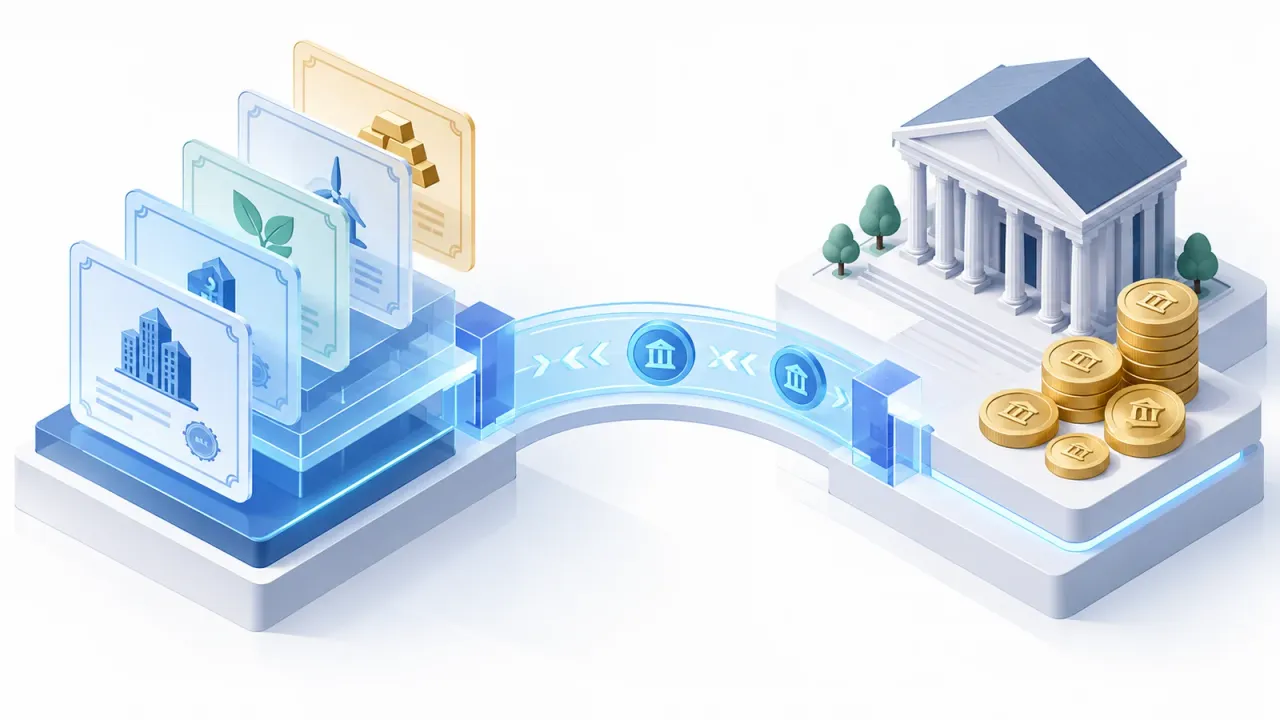
The deposit token pilot the FSC has just opened is an attempt to fill exactly this gap on the payment side.
It is not about moving yet another kind of asset on chain. It is about letting the deposits in bank accounts, the money used to pay, also be recorded and transferred in tokenised form.
The next time a company wants to invest more in a tokenised fund, if the systems on the asset side and the payment side can talk to each other, payment and asset delivery could connect on chain, cutting the cost of manually reconciling traditional ledgers.
How do deposit tokens, stablecoins and CBDCs differ?
When people talk about "money on chain", three concepts are easily mixed up: deposit tokens, stablecoins and central bank digital currencies (CBDCs).
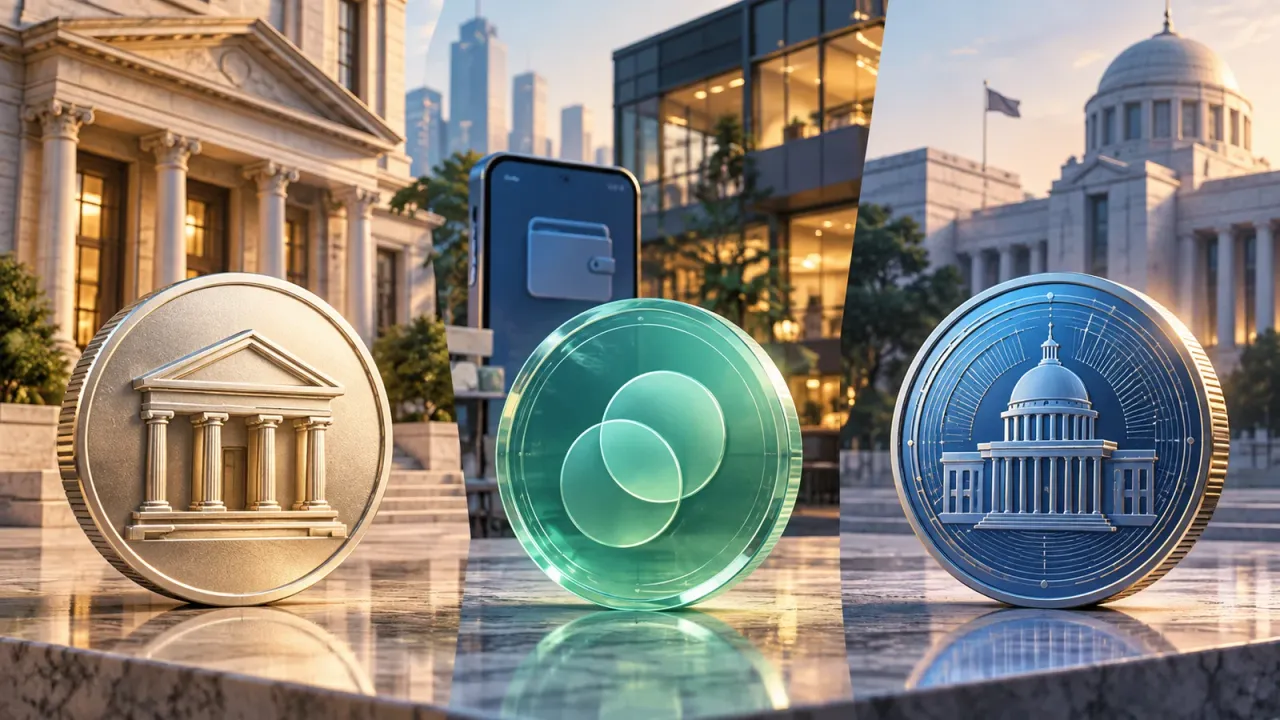
All three can exist in digital form, even on a blockchain, and all three can be used for payment or settlement. But the "money" behind each one is not the same.
The simplest way to tell them apart is to ask who issues it and who is responsible for paying it out.
A deposit token is, at heart, still a commercial bank deposit.
Say you hold NT$100,000 at Bank A, and the bank records part of it in tokenised form. Those tokens still represent your deposit claim on Bank A. In other words, the one who owes you the money is still the bank.
A stablecoin is different.
Take a US dollar stablecoin. The issuer typically holds cash, short-term US Treasuries or other reserve assets, and issues tokens that keep a fixed value against the dollar. What you hold is not a deposit in some bank account, but a digital asset issued by the stablecoin issuer. Whether its value stays stable depends on its reserve assets, its redemption mechanism and the regulatory framework.
A central bank digital currency (CBDC) is digital money issued by a central bank.
If a central bank issues a CBDC, what you hold is neither a claim on a commercial bank nor a claim on a stablecoin company, but money issued directly by the central bank.
So the biggest difference between the three is not whether they use a blockchain, but who issues them and what legal relationship stands behind them:
| Type | Issuer | What it represents | Main source of credit |
|---|---|---|---|
| Deposit token | Commercial bank | A bank deposit | The commercial bank and the deposit system |
| Stablecoin | Private issuer | A digital asset pegged to fiat currency | Reserve assets and redemption mechanism |
| CBDC | Central bank | Central bank money | The central bank |
That is why the three should not be treated as the same thing just because they may all appear on a blockchain or digital ledger.
Technology is only the vehicle. What defines each of them is who actually owes you the money.
Back to Taiwan's pilot: deposit tokens are neither a new stablecoin nor a digital New Taiwan dollar. They are an attempt to bring existing commercial bank deposits into a programmable payment and settlement environment.
How far is Taiwan from real on-chain finance?
At this stage, deposit tokens are still some way from everyday use by the public, from circulating between banks, and from becoming a large-scale on-chain payment tool.
What the FSC has opened is still only applications for pilots. How banks will design their ledgers, how they will connect with existing payment systems, whether different banks can interoperate, and who is responsible when a transaction goes wrong all remain to be tested step by step through real pilots.
Seen against the wider development of RWA, however, the importance of deposit tokens becomes clearer.
In recent years, the market has spent a great deal of effort on bringing bonds, funds, real estate and other real-world assets on chain. Yet as the asset side goes digital, payment and settlement remain in traditional systems, and the benefits of the new technology cannot be fully realised.
Even when an asset lives on chain around the clock, the final payment still has to go back to a separate banking system, leaving a break in the middle of the transaction.
So what is really worth watching in this pilot may not be that "Taiwan's banks are issuing tokens too", but that Taiwan is beginning to answer a more fundamental question:
As assets move on chain, how does the money in our banks join them in the new financial infrastructure?
If the asset side and the payment side can one day complete delivery and settlement in real time, programmably and within interoperable systems, RWA will be more than "turning assets into tokens". It will start to change how a financial transaction runs from start to finish.
This deposit token pilot may well be Taiwan's first step towards filling in that missing piece.